
RBI lowered economic growth for the current fiscal to 6.9 per cent from the previously projected 7.1 per cent, but saw it bouncing back in a big way to 7.4 per cent in 2017-18.
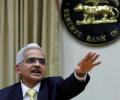
The MPC headed by RBI Governor Shaktikanta Das will announce the resolution of the meeting at around noon on Thursday.

Bankers on Thursday said the status quo in the monetary stance of the Reserve Bank is largely on expected lines taken after considering the tight liquidity situation and overall cooling inflation numbers.
The agency said the move on liquidity will lead to an ease in the situation.
The Reserve Bank of India on Friday decided to keep the benchmark interest rate unchanged at 4 per cent but maintained an accommodative stance as the economy is yet to recover from the impact of the second Covid wave.

The banking sector in India is reeling under Rs 8 lakh crore of non performing assets (NPAs) or bad loans, of which PSU banks alone account for over Rs 6 lakh crore.

Sentiments were also bearish largely in tandem with a sell-off in global markets as US Treasury yields surged to multi-year highs on robust economic data and comments from the Federal Reserve, sparking fears of accelerating inflation, brokers said.

RBI said inflation in the second half of the current fiscal is projected at 2.7-3.2%. It retained its GDP forecast for the current fiscal at 7.4%
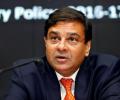
Demonetisation to result in short-run disruptions in cash-intensive sectors like retail, hotels, restaurants and transportation, RBI said while announcing the Monetary Policy

The Reserve Bank on Tuesday cautioned that continued uncertainty over monsoon could stoke food inflation, but expressed the hope that government policies will improve supplies in the coming months.
India has been relatively insulated from the severe headwinds in the West. However, with a third of the global economy expected to slip into recession in calendar year 2023, the impact will strongly be felt on India's exports and trade economy, leading economists said in a panel discussion at the Business Standard BFSI Insight Summit in Mumbai on Wednesday. The panel comprised former Reserve Bank of India executive director and former Monetary Policy Committee member Mridul Saggar, State Bank of India Chief Economic Advisor Soumya Kanti Ghosh, Citibank India Chief Economist Samiran Chakraborty, ICRA Chief Economist Aditi Nayar, and IndusInd Bank Chief Economist Gaurav Kapoor. The topic of the panel discussion was No recession in sight: Is India decoupled from developed economies?

Amid declining growth and moderating inflation, the Reserve Bank of India is likely to pause hike in interest rate at the mid-quarterly review of the Monetary Policy on Friday.

Size seems stuck at a low when compared with other developing economies, with various issues dogging growth.

'We are very watchful about inflation and growth. But the main challenge is economic revival and growth.'

The RBI has targeted 6 per cent inflation by January and 4 per cent by March 2018.

Reserve Bank Governor Raghuram Rajan on Thursday said the central bank will continue its focus on taming inflation, speeding up resolution of distressed projects and ensuring enough capital for banks through balance sheet clean-up.

Banks given 180-day time for NPA resolution, matter to be referred to Insolvency Board within 15 days.

Thanks to Rajan we are an inflation-targeting country now
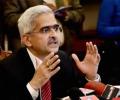
Reserve Bank Governor Shaktikanta Das has pitched for policy support from all sides -- fiscal, monetary and sectoral -- to nurture recovery of the economy hit by the second wave of the coronavirus pandemic. The dent on economic activity due to the second wave of the pandemic during April-May necessitated continuation of monetary measures to support the process of economic recovery to make it durable, Das had said while participating in the meeting of the Monetary Policy Committee (MPC) earlier in the month. "Overall, the second wave of COVID-19 has altered the near-term outlook, and policy support from all sides - fiscal, monetary and sectoral - is required to nurture recovery and expedite return to normalcy," Das said, as per the minutes of the meeting released on Friday.

Ahead of the monetary policy review on May 3, Reserve Bank of India (RBI) Deputy Governor Shyamala Gopinath said inflation was a concern, mainly on account of the high prices of non-food manufacturing goods.

Retail inflation fell to a five-month low of 4.35 per cent in September from 7.27 per cent in the year-ago period as prices of vegetables and other items declined, according to government data released on Tuesday. The moderation in Consumer Price Index-based inflation is in line with the assessment of Reserve Bank Governor Shaktikanta Das who recently projected substantial softening of retail inflation. The CPI inflation was at 5.3 per cent in August and at 7.27 per cent in September 2020.

India is poised to be the fastest-growing major economy in the world and an engine of global growth despite global headwinds, says leading industrialist and Aditya Birla Group Chairman Kumar Mangalam Birla. The economic activity in India has witnessed a sharp recovery to pre-pandemic levels on the back of a rapid and widespread rollout of the vaccination programme, Birla said in the latest annual report of UltraTech Cement Ltd. "A strong digital ecosystem, fiscal and monetary policy and various government schemes helped small and medium enterprises and the worst affected sections of the population to survive while reviving demand and bringing the economy back on track," said Birla while addressing UltraTech's shareholders.

A rate hike will set back the recovery process, but if RBI does raise rates, it will be to prevent the rise in food prices from spilling over to other sectors and to dampen inflationary expectations.

Given the macro setting, the outlook remains positive for each of the four key parameters - inflation, current account deficit, fiscal deficit and currency stability, says Rahul Bhushkute.
Exactly a fortnight ahead of the Reserve Bank of India's (RBI's) next monetary policy review, a key market indicator of interest rates - the overnight indexed swap (OIS) - suggests that the central bank may tighten policy by 35 basis points and then refrain from further rate hikes. RBI Deputy Governor Michael Patra recently described the OIS as the primary instrument for hedging interest rate risk in India. The six-member Monetary Policy Committee (MPC) of the RBI will meet on December 5-7.

The fuzziness of Trump's economic blueprint remains the biggest risk.

One incident should not be used to generalise the health of all cooperative banks, says RBI governor Shaktikanta Das.
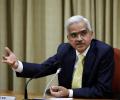
Reserve Bank Governor Shaktikanta Das on Wednesday said the country is at the doorstep of economic revival on the back of accommodative monetary and fiscal policies being pursued by the central bank and the government.

M V Subramanian says there is an imperative need for collective responsibility to tackle inflation, prices and availability of essential commodities, and not rely on inflation targeting alone.

Analysts are divided on their retail price inflation forecast, with some saying the first quarter numbers will overshoot the RBI target by as much as 60 bps while others are softer in their estimate. Consumer price inflation retreated from its 15-month peak of 7.4 per cent in July to 6.8 per cent in August, much lower than the market expectations, despite vegetable prices remaining elevated at 26.1 per cent. Food inflation eased to 9.9 per cent from 11.5 per cent, led by some cooling of inflation in vegetables, cereals, pulses and milk.

The change from wholesale to retail inflation as an anchor means that the weightage of diesel in inflation has decreased

There is little scope for significant monetary easing even in the next fiscal year.
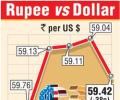
Forex dealers will keenly watch, instead, if the central bank indicates more measures to stabilise the currency or gives a timeframe for its current action.

Despite inflation easing, experts see RBI maintaining status quo on Dec 2
The fifth meeting of Monetary Policy Committee maintained the repo rate, at which it lends to the banks, at 6.25 per cent and the reverse repo, at which it borrows, will be 6 per cent.
The industry also emphasised on supply-side interventions by the government to tackle persistently high food inflation.

DBS called Rajan's decision not to seek an extension as a 'negative surprise'.

The retail inflation rate breached the 6 per cent upper tolerance limit of the RBI for the first time in seven months in January, while the wholesale price index stayed in double-digits for the 10th month in a row, showed two sets of data released by the government on Monday. Retail inflation, the key input for the RBI while reviewing the repo rate every two months, soared during the month mainly because of a spike in certain food items. The previous high for retail inflation was 6.26 per cent in June 2021.
